
Top Police Academies in the US: How Training Actually Works
Updated September 17, 2026
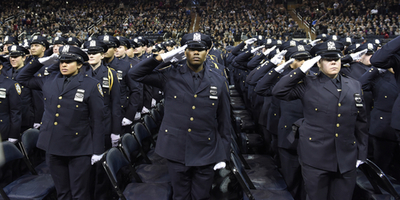
Police academy training runs through each state’s POST or standards commission, so requirements vary by state and agency. Most officers train through a state or local academy. Federal agencies train new hires through FLETC, which works with sponsoring agencies rather than accepting applicants directly. Expect physical, firearms, and legal training, timed differently by state and department.
Just as lawyers go to law school and soldiers complete basic training, aspiring police officers go through a training and certification process of their own: police academy. The exact path differs by state and agency, but wherever you train, expect it to challenge you physically and mentally. What you learn there could matter the day it counts most. Here’s how the system actually works, and what separates the strongest programs from the rest.


Why Become a Police Officer?
Every shift you work as a police officer is a chance to directly affect the quality of life in your community, whether that’s patrolling a rough neighborhood, responding to a domestic violence call, or writing up an accident report. The citizens you serve hand you real power, and with it comes real responsibility: you’re expected to live by an oath to protect and serve, even at cost to yourself.
Police work isn’t for everyone. But if you can handle the stress, the public scrutiny, the danger, and the demands, the job is more than a paycheck. It’s a calling and a lifestyle. Browse our full library of police career guides for a closer look at what the day-to-day actually involves.
How Police Academy Training Works
There’s no single national police academy system. Training and certification run through each state’s POST (Peace Officer Standards and Training) commission or equivalent body, and the path you take depends heavily on the job you’re after and where you live.
State and Local Academies
Most officers train through a state-certified academy tied to their hiring agency or a regional training center. Because standards are set state by state, curriculum, length, and admission requirements differ depending on where you apply.
Former Madison, Wisconsin police chief David Couper argues a strong academy should:
- Run like a modern, 21st-century training program rather than a military boot camp, with any physical “stressing” tied directly to the job
- Center its curriculum on the Bill of Rights and the workings of a free society, not just tactics
- Make room for honest discussion of race, policing, and the trust gap between officers and the communities they serve
- Work to build recruits’ maturity and emotional intelligence alongside their physical skills
Couper also recommends a year or more of field training with an experienced Field Training Officer (FTO) after the academy. That’s his own recommendation, not a certification standard. FTO programs are run by the hiring agency, not the academy, and their length varies by department.
Before committing to a program, talk to graduates and instructors, sit in on a training session if you can, and confirm directly with your state’s POST commission or standards authority that the academy is recognized. David Couper writes about many of these issues on his blog, Improving Police, a forum for police reform ideas.
Federal Training Through FLETC
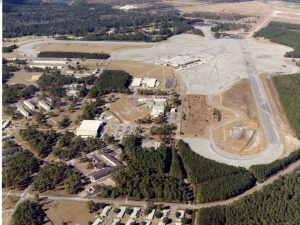
You can’t apply to FLETC on your own. It trains people who are already employed by, or sponsored by, one of its more than 90 federal partner organizations, including components of the Department of Homeland Security, the Secret Service, and the ATF. Rather than a single “federal academy” you choose to attend, FLETC functions as the federal government’s main interagency law enforcement training organization: some agencies route new hires through FLETC’s shared basic training programs, while others run some or all of their training in-house. You’ll most often encounter it through the Federal Law Enforcement Training Centers name.
FLETC’s main campus in Glynco, Georgia, includes 18 firearms ranges (a mix of indoor and outdoor ranges) and dedicated driver-training ranges, among other practical training facilities. Trainees typically live on site in dormitories for the length of their program.
Degree Programs with an Academy Component
Some community colleges and universities offer a criminal justice or police science program that pairs coursework with academy-style training. That combination can be efficient, but a college’s accreditation and an academy’s state certification are two separate things. Before enrolling, confirm directly with your state’s POST commission that the program’s training component actually satisfies your state’s certification requirements, not just that the college itself is accredited.
Look for:
- The program’s job placement rate for graduates
- Hands-on “shadowing” time with working officers
- Confirmed state certification for the training component, verified with your state’s POST commission
- Available tuition assistance
If cost is the obstacle, look at our Criminal Justice Trailblazer Scholarship, a $1,000 award for criminal justice students, or our full scholarship guide.
What Is Police Academy Training Like?
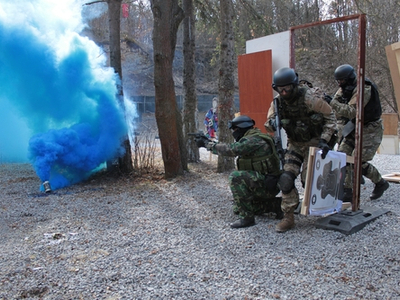
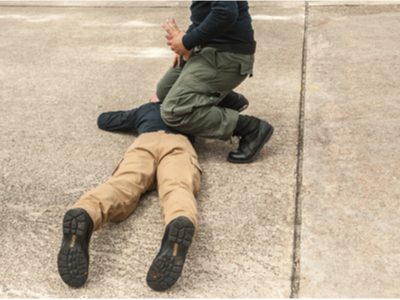 Academy training is built to prepare recruits for one of the more physically and mentally demanding jobs out there, and public scrutiny of officers has only grown with social media. Expect classroom instruction on state and federal law, investigation procedures, and department policy, alongside hands-on training in firearms, tactical driving, hand-to-hand combat, and custody procedures. The exact mix and order depend on your state and academy.
Physical fitness testing varies by state and department, but it’s real everywhere. Birmingham, Alabama’s police academy, for example, currently requires recruits to complete this obstacle course in 90 seconds:
- Push a car 15 feet
- Scale a 6-foot fence
- Crawl through a 2-by-2-foot window opening
- Walk a 5-yard balance beam
- Drag a 165-pound dummy 5 yards
Birmingham recruits also complete 22 push-ups and 25 sit-ups in one minute each, and run a mile and a half in under 15 minutes, 28 seconds. This is one department’s current standard, not a national one. Your target agency’s requirements may look different.
Where Police Officers Earn the Most, and Where Crime Rates Run Highest
 Where you work as a police officer affects your pay, your job prospects, and the general crime environment you’ll be working in. Here’s the current picture on all three, though it’s worth being clear the crime-rate data below describes each state’s overall reported crime, not a measure of occupational risk to officers specifically.
Salary
As of May 2025 BLS OEWS wage data, the median annual wage for Police and Sheriff’s Patrol Officers (SOC 33-3051) nationally is $76,210. Five states pay well above that:
| State | Median Annual Wage |
|---|---|
| California | $118,880 |
| Washington | $102,080 |
| Illinois | $100,520 |
| Alaska | $99,130 |
| Colorado | $97,350 |
California dominates the metro rankings in this dataset too, though not completely: Carson City, Nevada, breaks into the top three.
| Metropolitan Area | Median Annual Wage |
|---|---|
| San Jose-Sunnyvale-Santa Clara, CA | $136,140 |
| San Francisco-Oakland-Fremont, CA | $132,000 |
| Carson City, NV | $131,210 |
| Vallejo, CA | $129,900 |
| Napa, CA | $127,310 |
| Santa Rosa-Petaluma, CA | $125,910 |
| Santa Cruz-Watsonville, CA | $122,970 |
| Los Angeles-Long Beach-Anaheim, CA | $121,980 |
| Santa Maria-Santa Barbara, CA | $120,900 |
| Oxnard-Thousand Oaks-Ventura, CA | $119,640 |
Career Outlook
The BLS projects 3% national employment growth for Police and Sheriff’s Patrol Officers (SOC 33-3051) from 2025 to 2035, about average for all occupations. State-level projections run on a different cycle (2024–34, ProjectionsCentral, not a BLS figure) and show more variation:
| State | Projected Growth |
|---|---|
| Utah | 17.4% |
| Florida | 11.2% |
| Tennessee | 9.7% |
| Texas | 8.9% |
| Colorado | 8.7% |
| Washington | 8.4% |
| South Carolina | 8.1% |
| Virginia | 7.9% |
| Arkansas | 7.6% |
| New Mexico | 7.6% |
May 2025 US Bureau of Labor Statistics salary figures for Police and Sheriff’s Patrol Officers. National job growth figure (2025-35) from the same source. Long-term (2024-34) state job growth projections from the US Department of Labor-sponsored resource, ProjectionsCentral, a separate dataset from the BLS national figure. Figures reflect city, state, and national data, not school-specific information. Conditions in your area may vary. Data accessed September 2026.
Crime Rate
Reported crime rates vary widely by state, though they don’t tell you how dangerous the job of policing is in that state specifically. According to 2024 FBI crime data, the national violent crime rate was 359.1 incidents per 100,000 people, the lowest recorded since national tracking of this measure began in 1976.
| State | Violent Crime Rate |
|---|---|
| Alaska | 724.1 |
| New Mexico | 717.1 |
| Tennessee | 592.3 |
| Arkansas | 579.4 |
| Louisiana | 519.8 |
| State | Violent Crime Rate |
|---|---|
| Maine | 100.1 |
| New Hampshire | 110.1 |
| Connecticut | 136.0 |
| Rhode Island | 153.6 |
| Wyoming | 203.4 |
Washington, D.C. posts a higher rate than any state in both violent and property crime, though it’s really a city-level comparison rather than a state-to-state one.
2024 violent crime data from the Federal Bureau of Investigation, via USAFacts (updated November 2025). Data accessed September 2026.
Frequently Asked Questions
What’s the hardest police academy in the US?
There’s no official national ranking of academy difficulty. Federal training and academies with long field-training requirements tend to top informal lists, but “hardest” isn’t a measured or ranked category anywhere.
Do you need a college degree to attend a police academy?
It depends on the state, agency, and academy. Education, criminal history, age, and citizenship or residency requirements all vary, so check directly with your target agency rather than assuming a general rule. FBI Special Agents specifically require at least a bachelor’s degree; other agencies and departments set their own minimums.
How long does police academy take?
Length varies significantly by state, academy, and certification pathway. Check directly with the specific program or agency you’re considering rather than assuming a standard timeline.
What is FLETC?
FLETC (the Federal Law Enforcement Training Centers) is the federal government’s main interagency law enforcement training organization, based in Glynco, Georgia. It’s not something you apply to directly: it trains people already employed by, or sponsored by, one of its more than 90 federal partner organizations, including DHS components and the Secret Service.
Key Takeaways
- No single national system – training and certification run through each state’s POST or standards commission, and requirements vary from state to state
- FLETC isn’t open-enrollment – it trains recruits sponsored by federal partner agencies, not an alternative you can choose over a local academy
- Training mix varies – expect physical, firearms, and legal instruction, though the sequence and timing depend on your state and department
- Degree requirements vary – college-degree rules differ by state and hiring agency. A CJ degree program isn’t automatically a state certification pathway, so confirm that separately
- Pay and growth vary by state – among OEWS state wage data, California posts the highest median pay for this occupation. Among ProjectionsCentral’s 2024-34 state projections, Utah shows the fastest growth
Already picturing yourself with a badge? One specialty is worth a look before you commit to a specific track: canine officer. It’s a role that usually comes after some time on patrol, but it’s worth knowing what the path looks like early.